Don’t Eat that Doug! A case for trained fungi experts in BC
Should Pharmacists Be Trained to Identify Wild Edible Fungi?
Why, you ask? An Okanagan woman recently picked some random brownish wild mushrooms this fall and sold them as chanterelles (whoopsie) at a farmers’ market. If BC had trained experts responsible for fungi verification, we could avoid problems like these. Reading her story was frustrating. Moments like this erode public trust in the safety of wild mushrooms, and it was such an obvious error. Any commercial vendor who specializes in wild mushrooms would have known that her mushrooms were definitely not chanterelles at a quick glance. True chanterelles have a wrinkle/fold-like structure, not true gills, a firm white interior stem, and a characteristic fruity aroma. Paxillus involutus, on the other hand, has thin true gills and brown staining reactions. It was a no-brainer, even for someone with moderate knowledge of edible fungi.
Accidents happen, but this could have been dangerously misleading to unsuspecting buyers. If she’d misidentified something like Amanita smithiana, which resembles edible pine mushrooms, we could have been looking at a tragedy. To be clear, there have been very few deaths associated with mushroom poisoning in BC, but I’m certain there are many preventable, untracked “bathroom emergencies” that could be addressed with a better public safety net for fungi ID. At a bare minimum, the public should be able to trust that the mushrooms they buy from a vendor are verified and edible. A simple online certification process for vendors, issued through the BC Centre for Disease Control (BCCDC) which may already handle shellfish safety protocols, could be a practical solution, much like our mandatory food safety training for restaurant chefs.
What about expert help for recreational pickers, though? In many European countries, pharmacists or certified experts are trained to help the public identify their mushroom harvests. Could we do the same here? As a starting point, the BCCDC could host a web resource where the public submits data on harvested fungi for ID. It would nip online misinformation and plain blind ignorance in the butt before anyone takes a bite.
Because here’s an example of what happens in our current wild, wild west of AI misinformation:
Case Study: Doug, the Forest Ninja
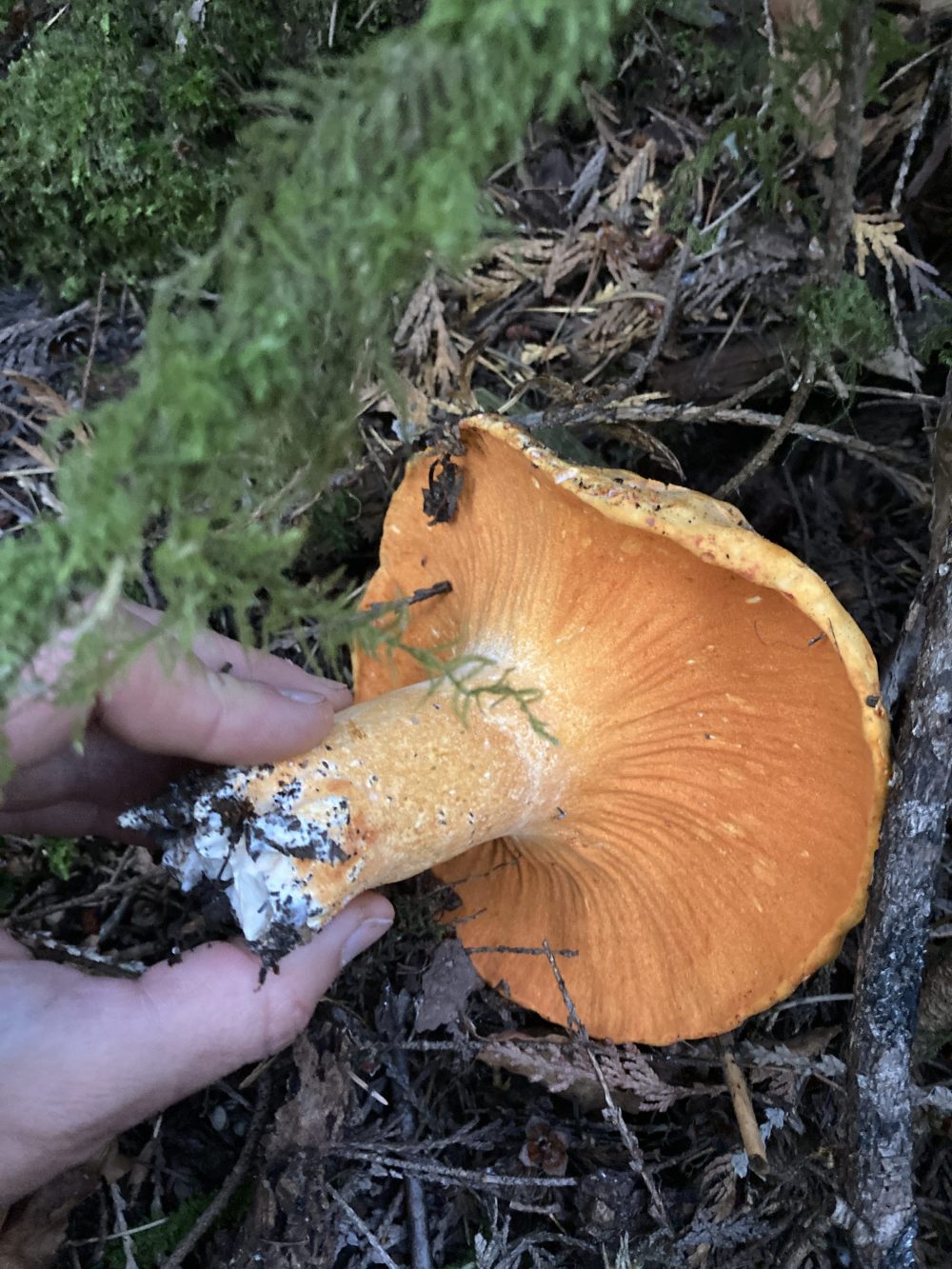
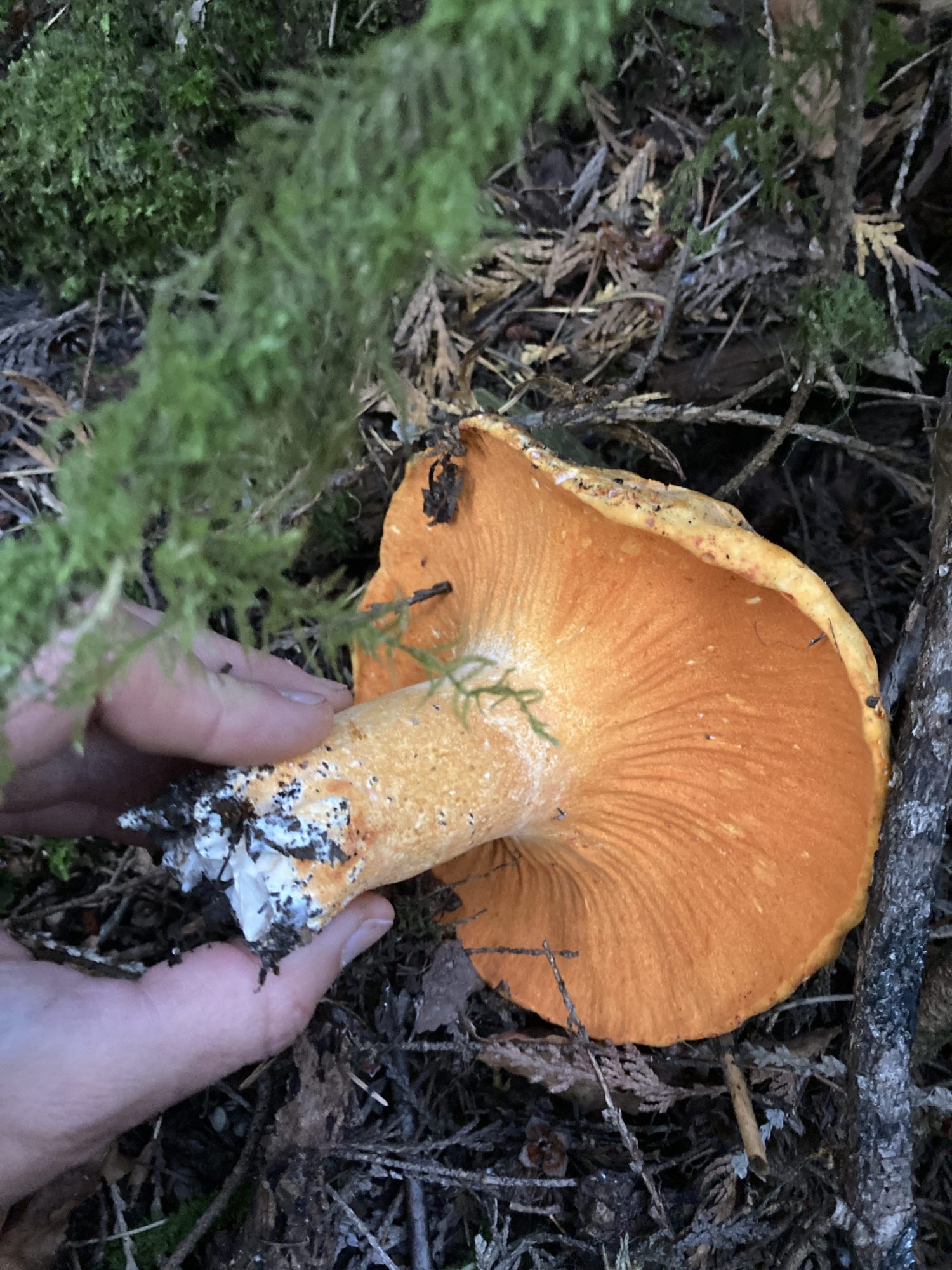
You know that friend “Doug”? The wilderness cowboy who fries up pans of questionable fungi with little to no data on human consumption? He’s out there, and he needs our help. Right now, Doug spots what looks like a chanterelle in the forest (because it’s orange and smells good?!) picks a bucketful, and brings them home to share with his friends. Spoiler alert: those friends will soon be former friends if he’s got his ID wrong. Then, the universe rolls the dice on whether the group is fine, violently ill, or worse.
In a perfect world, Doug could submit several mushroom photos in a specific format to the BCCDC before deciding to eat them. They’d need to be quality shots showing all identifying features, paired with a quick dropdown menu for aroma, staining reactions, habitat, and other critical ID details. This wouldn’t work for every species, but it could absolutely work for a subset of easily identifiable edibles like hedgehog mushrooms, cauliflower mushroom or chanterelles. If the system couldn’t ID the fungi definitively, it would flash a bold DON’T EAT IT in blinking red, or a WAIT while experts manually review the submission. You can’t identify all fungi from photos, but giving the curious public clear, verified help on select species is infinitely better than leaving them to navigate an information vacuum or trust a suspect AI app. It might save lives, and prevent a lot of human-hours spent on the toilet.
With the growth of AI adoption, we’ve seen a rise in mushroom poisonings as public trust in AI sits firmly in its overconfident toddler phase. Let’s get ahead of the problem and provide people with solid, science-backed information. We aren’t going to stop people from the joy of a forest treasure hunt for edible mushrooms. It’s fun, wonderful, and vital for establishing a real connection with the world around us that we might value it to preserve it for the future.
And for the people who think picking mushrooms for the table is crazy… well, if you’ve ever picked a blackberry and eaten it, you’re a forager. Someone once whispered to you that they were tasty, and you learned to name and find them. It’s the same with mushrooms. Berry picking is a beautiful ritual of connection. Robin Wall Kimmerer puts it perfectly: “How are we going to fall in love with the world if we don’t pick berries (or fungi)?” Her point is that nature isn’t just for looking at; it’s more important to be part of it. To touch, smell, and taste it. Mushrooms are just more fun than wild berries because their delicious flavours and textures vary wildly, and they’re genuinely a joy to cook with and good for us. They tend to trigger more fear in people, which baffles me, considering there are plenty of poisonous berries too.
A trained expert network that people can rely on wouldn’t kill the foraging spirit. It would just make sure we all make it to the dinner table happy, and to the bathroom unscathed.